-
Thread
ESP8266 "calling home"
use in Wireshark. My device is an ESP8266 coupled with an I2C BH1750 light sensor. The ESP8266 contains portions of the „ESP8266AdvancedWebserver“ example of the Aruino IDE (1.6.4) plugin, which was installed through the board-manager. The
anything that could explain the behaviour. I have made use of the following libs: #include <ESP8266WiFi.h> #include <WiFiClient.h> #include <ESP8266WebServer.h> #include <ESP8266mDNS.h> #include <Wire.h> #include <math.h> At the moment I cannot re-enact this situation in lab conditions and
-
Article
ESP8266
zueinander aufbauen. Das Feature nennt sich AP-Isolation. Produktbeschreibung: Pinbelegung einiger ESP8266-Module. ESP8266-01. Quelle . ESP8266-07. Achtung, beim ESP8266-07-Modul sind einige mit vertauschten Beschriftungen von GPIO4 und GPIO5 unterwegs . ESP8266-12E. Das ESP12E-Modul gehört vermutlich
SDK-Beispiele (IoT,AT) entsprechend der offiziellen Anleitung kompilieren, flashen und läuft es? Links. ESP8266-Eintrag auf en.wikipedia.org ESP8266-Community-Forum ESP8266 Github mit Wiki und Source-Code-Beispielen Hackaday-Posts zu ESP8266 ESP8266-Seite des Herstellers ESP8266-Forum des Herstellers ESP8266
-
Thread
How to adjust WiFi-channel for ESP-NOW
anything about hwo to adjust the Wifi-channel with ESP-NOW. Does anybody know how this is done for ESP8266-modules. ESP32 uses a different library so you can't jsut look up ESp32 and copy it for ESP826. Hallo, ich probiere gerade zwischen zwei ESP8266 Modulen (Wemos D1-mini) parallel ESP-NOW
dem WiFi-Router verwendet wird. Ich habe aber nichts darüber gefunden wie man bei ESP-NOW fr ESP8266 den Kanal einstellt. Bei ESP32 wird eine andere Library benutzt. Deswegen kann man die Erkenntnisse von ESP32 nicht auf ESP8266 übertragen. Jedenfalls nicht alle. Weiß jemand wie man bei ESP8266
-
Article
WordClock mit WS2812
Modul Anschlüsse Nucleo-Board: ESP8266 GND an GND ESP8266 VCC an externe 3,3V (Vorsicht: Modul zieht bis zu 200mA!) ESP8266 CH_PD an PA6 ESP8266 RST an PA7 ESP8266 GPIO0 an PA4 (NEU!) ESP8266 TXD an USART6 RX (PA12) ESP8266 RXD an USART6 TX (PA11) Anschlüsse BluePill: ESP8266 GND an GND ESP8266 VCC an externe 3,3V (Vorsicht: Modul zieht bis zu 200mA!) ESP8266 CH_PD an PA1 ESP8266 RST an PA0 ESP8266 GPIO0 an PA4 ESP8266 GPIO2 via 10k an externe 3,3V ESP8266 TXD an USART2
-
Article
ESP8266-CPCB
Stepdown, LDO, USB inkl. USB UART, ... Multiple VCC3V3-Pins als quasi-separate Spannungsquellen auf ESP8266-PCB benutzen -> Nur wenig VCC3v3-Routing auf ESP8266-PCB Für Platzierung und Bestückung des ESP8266 Unterhalb des ESP8266: Kein Stopplack, kein Kupfer Um ESP8266 rings herum Stopplack und Kupferbahnen nur herangeführt Platzierung aufgrund der Senke (kein Stopplack) Großes Via unter ESP8266; Via-Ring abhobeln,damit ESP8266 flach liegt; Nachträglich verlöten von Rückseite GND des Spannungswandlers separat hereinführen Ground-Vias beim Antennenpad, möglichst kurze Distanz von ESP8266-Antennenpin
-
Thread
Set callback to validate a server certificate // security protocol used in a HTTP GET request
Hello altogether, I am trying to program an ESP8266 with the Arduino IDE. By the help of https://randomnerdtutorials.com/esp8266-nodemcu-http-get-post-arduino/ I created a so called sketch which sends a HTTP GET request to a WebService running on a
but may require a certificate as parameter of [c] begin(); [/c] (Source: https://github.com/esp8266/Arduino/blob/5d2563eee98ae116dc3d4b6bc14225efb3c85098/libraries/ESP8266HTTPClient/src/ESP8266HTTPClient.h#L153) Is it possible to set ServerCertificateValidationCallback and the SecurityProtocol
-
Thread
ATmega328 + ESP-01s low power brainstorm
outside of these hours. \*\*\* I suppose an even better approach would be to use a variant of the ESP8266 that has more pins available but I already have three ESP-01s so I'd like to stick with them now.
first step to save power is to reduce the chip count. Reading the sensor can be done with an ESP8266, so you can save the arduino board completely. Deep sleep the ESP8266 https://www.esp8266.com/wiki/doku.php?id=esp8266_power_usage and you achieved your goal.
-
Article
UClock
zum Spielen auf der Uhranzeige Download. WICHTIG Es ist unbedingt erforderlich, dass die passende ESP8266-Firmware zur STM32-Firmware eingespielt wird! Ältere ESP8266-Firmware-Versionen führen auf jeden Fall zu Fehlverhalten! Regel ist dabei: Die STM32-Version A.B.C muss mit der ESP8266-Firmware in den
19.10.2019 Aktuelle ESP-Version: 3.0.0T6 vom 19.10.2019 EmBitz-Projekt für STM32 und Sources für ESP8266: Tarball SVN hier auf µc.net: svn://mikrocontroller.net/uclock/ Repo-Browser: uClock im SVN Hex-Datei für Nucleo STM32F411RE: Bin-Datei für ESP8266 ESP-12F:
-
Thread
ESP8266 RGB LED Strip Controller
which is already being developed in my free time. For the WiFi module I want to use the infamous ESP8266 board, namely an ESP-07 (http://www.banggood.com/ESP8266-ESP-07-Remote-Serial-Port-WIFI-Transceiver-Wireless-Module-p-968191.html). The plan is to flash it with nodemcu (http://nodemcu.com/index_en.html
that I want to use transistors or MOSFETs to drive the LED Strips 12v using the 3.3v logic of the ESP8266. From what I know, I should choose a FET that can be switched fast (requirement for PWM) and has a maximum gate threshold voltage below 3.3 Volts. Based on these requirements and the availability
-
Thread
Custom ESP8266 Board unable to connect
Hello there I have made a custom ESP8266 board with which I want to operate WS2812 LEDs with WLED. I have received and assembled the PCBs and wanted to upload the blink sketch for testing with the Arduino IDE. However, I get an error message
must NOT be connected, because they are used for the flash memory. See http://stefanfrings.de/esp8266/index.html Notice the "translate" link in the upper right corner.
-
Article
Übersicht Funkmodule
Vergleich zu kabelgebundenen Übertragungen, entspricht jedoch lediglich 1/8 typischer WLAN-ICs (ESP8266). ESP8266. Das WLAN-Modul kann sowohl Client als auch AP sein. Damals hat der Release einen starken Hype ausgelöst und dementsprechend ist die Community rasant gewachsen, wodurch sich sogar ein eigenes
Verfügung gestellt, es gibt aber auch eine Port vom GCC und selbst in die Arduino Umgebung ist der ESP8266 mittlerweile eingepflegt. ESP8266 MicroPython NodeMCU LUA Interpreter Website NodeMCU Firmware Arduino ESP8266 EMW3162. HackADay Eintrag Datasheet Links. Thread zum Artikel (Fragen, Anregungen etc
-
Thread
Manipulation of json
Sorry forget the information...it's in esp8266 code I need this in an Arduino code..
schrieb im Beitrag #7240898: > https://stedolan.github.io/jq/manual/ I guess that won't run on an esp8266. But anyway, here is an example for sh: [code] echo [[2,3],[5,6]] | jq -c [.[],[7,8]] [/code]
-
Article
ESP8266 nodeMCU Lua
ESP8266 nodeMCU-Boards in Lua programmieren:. === Dieser Artikel handelt von Microcontroller-Boards die auf den ESP8266-Modulen basieren und als Firmware ausschließlich nodeMCU / Lua nutzen. Das heißt es soll ausschließlich um die Programmierung in der Scriptsprache Lua gehen. Wer den ESP8266-Module mit Arduino-IDE oder irgendwie anders programmieren möchte möge sich auf die Seiten begeben die sich damit beschäftigen. Dieses Wiki ist ausschließlich und exklusiv für die Lua-Programmierung
-
Article
Tutorial - Aufbau WordClock mit WS2812
> connected -> blaue LED auf dem ESP Modul 12 blinkt -> der Übertragungsstatus wird im Programm "esp8266_flasher.exe" angezeigt -> nach einigen Sekunden -> blaue LED des ESP Moduls 12 ist aus -> Im "esp8266_flasher.exe" wird angezeigt: ......... ......... leaving failed to leave Flash Mode -> "esp8266
muss neu gestartet werden Die Website der Uhr hakt oder hat Timeouts Ping auf die IP-Adresse des ESP8266 ist wesentlich größer als 10msec oder setzt für mehrere Sekunden aus STM32F103C8T6 Mini-Development Board. Falsche STM32 Software geflasht, mögliche Symptome: Die LED PC13 des STM32F103 Board leuchtet
-
Thread
Curl Arduino nano
by HTTP-Put into the cloud/on a RasPi/HomeServer/NAS/... However those examples tend to use a ESP8266 (or to run on the ESP8266 entirely), because with that Wifi module TCP/IP is already taken care of. Not sure how you want to use HTTP over nRF24, you have a second Arduino with another nRF24-Chip
-
Thread
ESP-07 AT commands not working, programming works though
] I did flash my 1st ESP-07 with the latest SDK from https://www.espressif.com/en/products/socs/esp8266ex/resources and it now shows boot version 1.7 while the other values are the same as above. The AT problem is the same as on both of the ESP-07 though. I did also flash my ESP-12 with the latest
reset pin, and also no pull-up resistor. See the schematics details on http://stefanfrings.de/esp8266/index.html#esp12 Can you start them by issuing an extern reset pulse?
-
Thread
Wordclock stopped working
current eeprom version: 0x00000000 updating EEPROM to version 0x00020900... done DFPLAYER LOGGER ESP8266 LOGGER read rtc: Su 2000-01-01 00:00:13 read rtc: Su 2000-01-01 00:00:13 DFPlayer: SD card online DFPlayer: query software version DFPlayer: Version 0008 DFPlayer: set source device: 2 DFPlayer: set eq 0 DFPlayer: set volume 0 DFPlayer is up dfplayer is online esp8266 now up (- setup UDP) (- local port: 2421) (- setup server UDP) (- local port: 2424) (FIRMWARE 2.9.5) (- tables found; wc12h-tables-en2.txt) (- check tables successful) --> tabinfo<0d><0a>
-
Thread
Reverse phase control / trailing edge dimmer with Arduino / ESP8266
I want to build a trailing edge control / reverse phase control dimmer controlled by Arduino or ESP8266. The dimmer is mainly meant for dimming electronic transformers for 12V AC halogen lamps (example http://www.osram.com/osram_com/products/electronics/electronic-control-gears-for-traditional-lighting
German Translation: Wie der Titel schon sagt möchte ich einen PhasenABschnittdimmer mit dem ESP8266 realisieren. Ziel ist die dimmung von elektronischen NV Halogen Trafos (die Trafos sind explizit nur für PhasenABschnittdimmung geeignet und werden derzeit mit ELV DI22-2 gedimmt). Hierzu habe
-
Article
ESP32
Der ESP32 ist ein WLAN-SoC (System On Chip). Der Nachfolger des beliebten ESP8266 vereint zwei 32 Bit CPU-Kerne mit Floating Point- und DSP-Funktionen, sowie Unterstützung für bis zu 8 MB RAM, mit Bluetooth- und WLAN-Konnektivität. Ideal für kleinere, stromsparende IoT-Geräte die
Projekt auf GitHub Diskussion über Espressif IoT Development Framework im Forum Beiträge zu ESP32 und ESP8266 im Forum
-
Article
Wanderkiste (Widlar)
, TTL, OpAmp, Spannungsregler, Spulen, MosFet uvm 6 Dennis S. 58xxx 18.02.2023 23.02.2023 B: Div.ESP8266 Boards, NFC Tags, DC-DC Converter, VOLTCRAFT GDM705 (Problem bei der Dioden/Kapazitätsmessung, bin nie dazu gekommen zu schauen warum), BeagleBoard xM (mit Metallgehäuse, neuwertig), InEar Kopfhörer
Stecker (Crimp), fertige RJ45 Kabel, 8xATMEGA328(SMD)+passende Eval-Boards, Yubico Security Key, ESP8266, S-OnOff-WLAN-Steckdose(kann mit Tasmota geflasht werden), PIR Sensor, div. ältere Speichermodule/Chips; Details/sonstige Wünsche gern anfragen. 10 Annell 081xx 357560366674 DHL S:ESP 32 und MCP23017
-
Article
-
Thread
Problems with ESP8266, IRF510N and circuitboards
Good evening. I encountered some problems during my Project with the ESP 8266 in combination with the IRF510N on a circuit board. I wanted to build an RGB controller for common anode RGB LED strips. The project and the code are done, and I tested the whole project on my breadboard
The more important test was to check whether there is a voltage drop between the GND pin of your ESP8266 and the source pins of your transistors. You did not answer this question.
-
Article
IRMP
Board) STM32 mit HAL-Library (NEU!) STM8 STM8S103F3 TI Stellaris LM4F120 Launchpad (ARM Cortex M4) ESP8266 (NEU!) ESP8266-EVB TEENSY 3.0 (NEU!) MK20DX256VLH7 (ARM Cortex-M4 72MHz) MBED (NEU!) LPC1347 Cortex-M3 mit 72 MHz LPC4088 (Embedded Artists) ChibiOS HAL (NEU!) Verschiedene ARM-Cortex-µCs, wie z.B
PIC12F1840 irmp-main-stm32.c - STM32 irmp-main-stellaris-arm.c - TI Stellaris LM4F120 Launchpad irmp-main-esp8266.c - ESP8266 irmp-main-mbed.cpp - MBED examples/Arduino/Arduino.ino - Teensy 3.x irmp-main-chibios.c - ChibiOS Auch auf PIC-Prozessoren ist IRMP lauffähig. Für den PIC-CCS-Compiler sind entsprechende
-
Article
UHF-Modulator ALPS MDLP3W104A
V-Mikrocontroller herausfordernd werden (siehe unten). Beim Autor funktioniert aktuell ein Wert von 3k3 an einem ESP8266 über einen "2-MOSFET-Levelshifter" und zeigt ausreichend Abstand zu der Low-Schaltschwelle des ESP als auch eine spezifikationsgemäße Anstiegszeit. FIXME Screenshot vom Scope! Besonderheiten bei 3,3
sichergestellt werden, dass der Low-Pegel auf der 3,3 V-Seite im zulässigen Bereich liegt (beim ESP8266: 25% Vsup i.e. ca. 825 mV bei 3,3 V Versorgung), da hierdurch auf der SDA-Leitung das ACK-Bit zurückgesendet wird. Zu niedrige Pull-Up-Widerstände auf der 5 V-Seite(!) bewirken einen zu hohen Pegel
-
 Image
Image
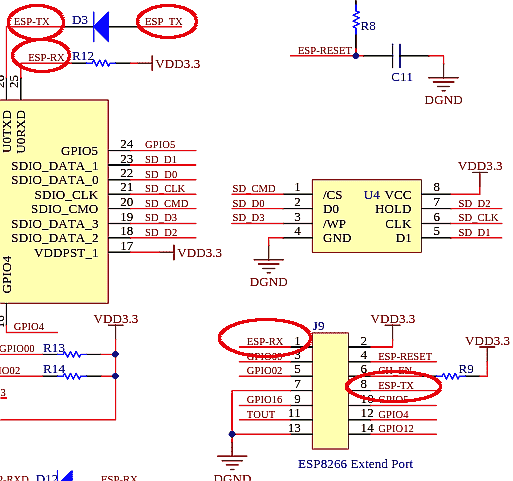
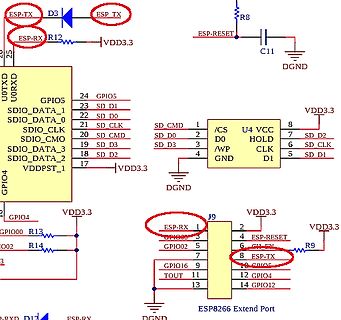
Schaltplan eines ESP8266 Extend Ports
VDD3.3, GPIO4, VDD3.3, GPIO00, R13, GPIO05, R14, GPIO16, TOUT, GPIO12, J9, ESP-RESET, ESP-TX, ESP-RX, ESP8266 Extend Port, R9
-
Thread
Hardware-independent µC core?
Hi, the problem: my code wants to run on a couple disparate microcontrollers (ESP8266, "small" STM32, AVR AtMega). Besides the usual digital I/O which e.g. Arduino supports cross-platform I need stuff like port interrupts, timer interrupts, and letting the controller sleep until something
-
Article
IRMP - english
Board) STM32 with HAL library (NEW!) STM8 STM8S103F3 TI Stellaris LM4F120 Launchpad (ARM Cortex M4) ESP8266 (NEW!) ESP8266-EVB TEENSY 3.0 MK20DX256VLH7 (ARM Cortex-M4 72MHz) MBED (NEW!) LPC1347 Cortex-M3 72 MHz LPC4088 (Embedded Artists) ChibiOS HAL (NEW!) Various ARM Cortex MCUss, for example STM32, Kinetis
PIC12F1840 irmp-main-stm32.c - STM32 irmp-main-stellaris-arm.c - TI Stellaris LM4F120 Launchpad irmp-main-esp8266.c - ESP8266 irmp-main-mbed.cpp - MBED examples/Arduino/Arduino.ino - Teensy 3.x irmp-main-chibios.c - ChibiOS IRMP also runs on PIC processors. For the PIC-CCS compiler the necessary preprocessor
-
Thread
NodmCU ESP8266 not to flash
I have tried everything under different operating systems and with various USB cables. I even bought a super-short USB data cable especially for this purpose. The error message reads: ‘Failed to connect to Espressif device: Timeout waiting for packet header’. Pressing the boot or rst button did not help either. I am completely at a loss. Even the trick with the 10 my Elko was unsuccessful.
-
Thread
PCB w/ ESP8266 NodeMCU - Multiple SPI modules not working
Hello, I've been working on a project for quite a while now, which involves the ESP8266 NodeMCU (v1.0), as well as two SPI Modules: ENC28J60, and RFID-RC522. With that being said, I encountered a problem recently, which I haven't been able to resolve so far. Working with micro-controllers
-
 Image
Image
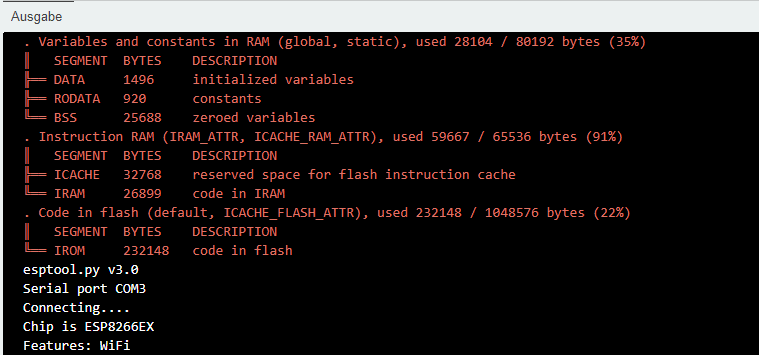
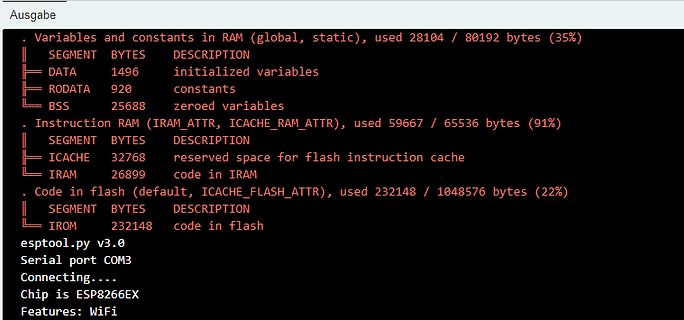
Speicherbelegung und Chip-Informationen ESP8266EX
bytes (22%) |-- IROM 232148 code in flash esptool.py v3.0 Serial port COM3 Connecting.... Chip is ESP8266EX Features: WiFi
-
 Image
Image
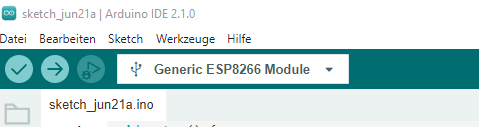
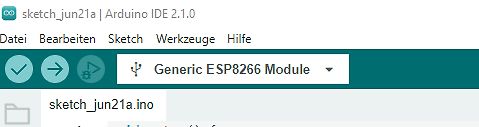
Ausschnitt der Arduino IDE mit ESP8266 Auswahl
sketch_jun21a | Arduino IDE 2.1.0 Datei Bearbeiten Sketch Werkzeuge Hilfe Generic ESP8266 Module sketch_jun21a.ino
-
Article
Benutzer:Mampf
veröffentlichen. STM32F429 DIY-Board. STM32F429 @ 168MHz 32MB SDRAM I2S Audio-DAC IR (derzeit unbenutzt) WLAN (ESP8266) µSD 2 USB (CDC, zweites Interface nicht benutzt) Software: Helix MP3-Decoder 7 Band (IIR) Equalizer Sagenumwobende Chris Audio Dynamic Compressor (ursprünglich ein Lisp-Audacity-Plugin - nach C portiert
-
Article
Datei:STM32F103-Bootloader.png
Anschluss ESP8266 an BOOT0
-
Article
Datei:WC24h-ESP8266-ESP-01.png
Anschlussbelegung ESP8266-ESP-01
-
Article
Datei:ESP8266-PinBelegung2.jpg
ESP8266-Pinbelegung - Klein mit Keramik-Antenne
-
Article
Datei:ESP8266-PinBelegung1.jpg
ESP8266-PinBelegung -- Groß mit PCB-Antenne (von Bestückungsseite aus gesehen)
-
Article
PIC18F Testboard
Testprogramm um mittels des PIC's und des ESP's einen AT-basierenden Webserver zu realisieren: In der esp8266.h sind eure Zugangsdaten zum Router einzutragen: //wifi connections settings const char ssid[] = "SSIS"; const char passwd[] = "Passwort"; Wenn als kompiliert und der Controller geflasht ist, kann
-
 Image
Image
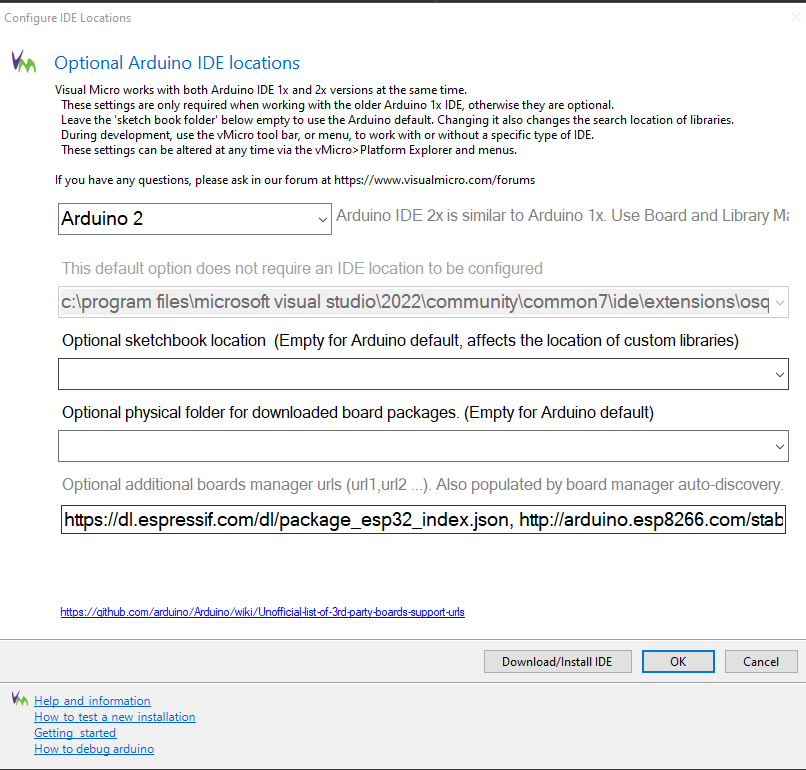
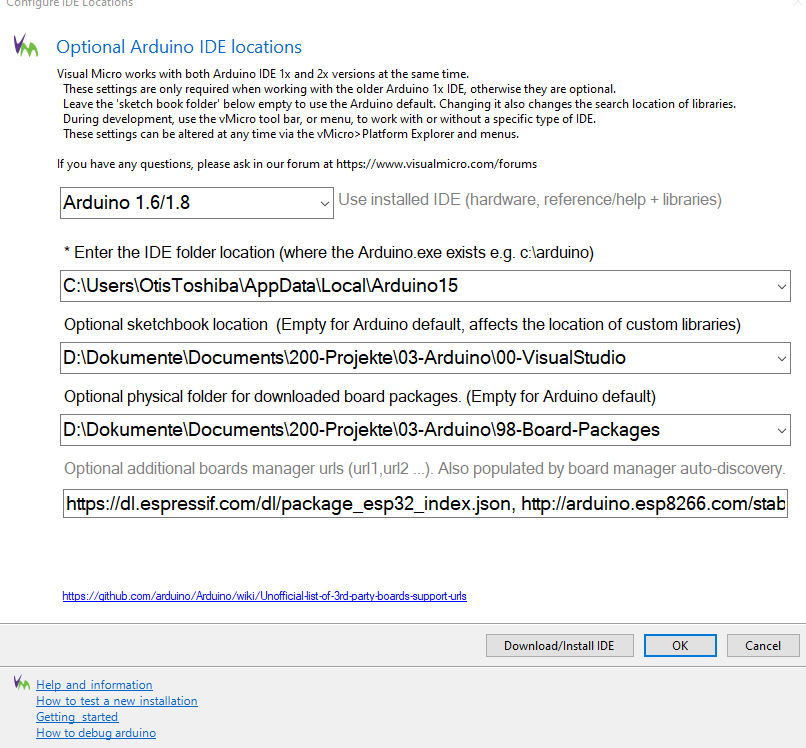
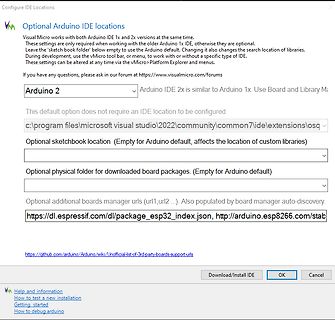
Konfigurationseinstellungen für Arduino IDE in Visual Micro
board manager auto-discovery. https://dl.espressif.com/dl/package_esp32_index.json, http://arduino.esp8266.com/stab Download/Install IDE OK Cancel Help and information How to test a new installation Getting started How to debug arduino
-
 Image
Image
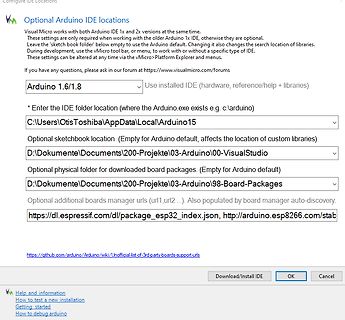
Einstellungen für Arduino IDE Pfade in vMicro
board manager auto-discovery. https://dl.espressif.com/dl/package_esp32_index.json, http://arduino.esp8266.com/stab https://github.com/arduino/Arduino/wiki/Unofficial-list-of-3rd-party-boards-support-urls Download/Install IDE OK Cancel Help and information How to test a new installation Getting started
-
Article
Wer hat was
Cs, ATMegas, ATTinys, STM32, 3D Drucker, Verschiedene ISP Programmer (auch welche ab zu geben), ESP8266, Funkmodule 433MHz, 2.4GHz, I2C LCD Module und vieles mehr Thüringen. matrixstorm Erfurt/Schwansee 99195 auch alles moegliche in SMD und DIP: reichlich (jeweils mehrere) AVRs: ATmega8(A), ATmega328p
-
Article
Giess-o-mat
so ist dieser Beitrag sehr empfehlenswert: Hier gibt es ein Projekt mit einem WeMos D1 Mini 1 / ESP-8266 : Für die Anbindung an einen Arduino gibt es ein fertiges Sketch: Oder gleich ein fertiges Arduino shield: Oszilloskopbilder des originalen Sensorsgnals und dem Signal nach einem Frequenzteilers mit
-
Article
STM8
STM8S103F3P6 Breakout Boards aus China (ca. 0.60 EUR / Stk ), ST-Link wird benötigt (oder alternativ ein ESP8266 mit esp-stlink firmware) Weblinks. STM8-Familie auf der ST-Website Schnellübersicht über STM8-Familie und Starter Kits Evaluation board STM8S-Discovery auf der ST-Website Wiki-Artikel zum STM8S-Discovery
-
Article
WS2812 Ansteuerung
Stromversorgung für lange LED-Streifen mit vielen LEDs, hier als Excel-Arbeitsblatt Forumsbeitrag: Esp8266 mit ca. 13 m ws2812b Forumsbeitrag: WS2812B mit 3.3V ansteuern Forumsbeitrag: Einfache Ansteuerung von 8x WS2812B Weblinks. NeoPixels Revealed: Getting physical to uncover PWM Secrets Einstieg in